Hanuman's Role in Sita’s Rescue
Hanuman plays a pivotal role in the rescue of Sita, aiding Rama in locating her and contributing significantly to the defeat of Ravana’s forces. After meeting Sita in Lanka, Hanuman reassures her of Rama’s determination to rescue her and delivers Rama's ring as a symbol of his devotion. His courage and resourcefulness are vital in the success of Rama's mission, leading to the eventual triumph over Ravana and the rescue of Sita.
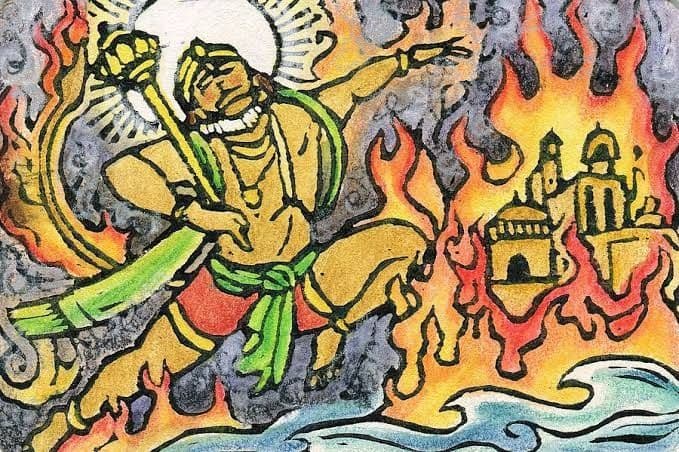
Hanuman's Role in Sita’s Rescue
Date
Treta Yuga (Mythological Time Period)
Location
Lanka (Sri Lanka)
- HanumanMessenger, Devotee, and Warrior
Hanuman's devotion to Rama is showcased as he locates Sita in Lanka, reassures her, and brings back crucial information. His courage in overcoming obstacles, such as his leap to Lanka, and his contribution to the battle are key to Sita's rescue.
- RamaAvatar of Vishnu, Husband of Sita
Rama’s unwavering determination to rescue Sita is supported by Hanuman, whose actions enable the success of the rescue mission and the ultimate victory over Ravana.
- SitaWife of Rama
Sita, abducted by Ravana, is finally reassured by Hanuman, who delivers Rama’s message and promise to rescue her.
- RavanaDemon King of Lanka, Abductor of Sita
Ravana’s tyranny and abduction of Sita set the stage for the heroic actions of Hanuman and Rama in the rescue mission.
- SugrivaMonkey King and Ally of Rama
Sugriva, alongside his army, plays a crucial part in assisting Rama in the war against Ravana, with Hanuman being the key warrior in their campaign.
- VibhishanaRavana’s Brother, Defector to Rama's Side
Vibhishana, who defected from Ravana’s side to support Rama, provides crucial inside information about Lanka that aids in the rescue mission.
- Step 1: Hanuman, sent by Rama, leaps across the ocean to Lanka to find Sita and deliver Rama’s message of hope and love.
- Step 2: Hanuman meets Sita in Ashoka Vatika and reassures her of Rama’s commitment to rescuing her, presenting Rama’s ring as a token of his promise.
- Step 3: After a brief battle with Ravana’s forces, Hanuman allows himself to be captured, and then sets fire to parts of Lanka with his tail before returning to Rama with news of Sita’s well-being.
- Step 4: Hanuman’s return with vital information regarding Sita’s location boosts the morale of Rama’s army, and they begin to prepare for the final battle with Ravana.
- Step 5: With the help of Vibhishana and Sugriva, Rama’s army builds a bridge to cross the ocean to Lanka, leading to the final confrontation with Ravana.
- Step 6: During the battle, Hanuman plays a crucial role in fighting Ravana’s warriors and in protecting Rama’s army, ensuring the defeat of Ravana and the rescue of Sita.
- Step 7: After Ravana’s defeat, Sita is finally reunited with Rama, marking the fulfillment of Hanuman’s efforts and the victory of good over evil.
Core Idea
Hanuman’s role in Sita’s rescue highlights the depth of his devotion, bravery, and selflessness. His unwavering support for Rama in the face of danger proves his unparalleled loyalty and dedication. This event solidifies Hanuman’s role as the ultimate devotee and servant of God.
Moral Lesson
Devotion, courage, and selfless service are the keys to overcoming any obstacle. Hanuman’s actions demonstrate that true loyalty to one’s purpose and to divine will brings success and fulfillment.
Rama S Ring
Symbolizes faith, trust, and the bond between Rama and Sita. It serves as a tangible token of Rama’s devotion and commitment to rescuing Sita.
The Leap
Hanuman’s Leap to Lanka represents the boundless courage and devotion that can overcome great distances and obstacles. It is a symbol of the power of faith and determination in achieving one’s purpose.
Spiritual Impact
This event demonstrates Hanuman’s role as a perfect devotee, capable of performing miraculous feats in service to his Lord. It is a key moment that elevates him to the status of a divine figure in Hinduism.
Cultural Impact
The rescue of Sita is one of the most iconic moments in the Ramayana, widely celebrated in various forms of art, drama, and literature, particularly during the festival of Diwali, symbolizing the triumph of good over evil.